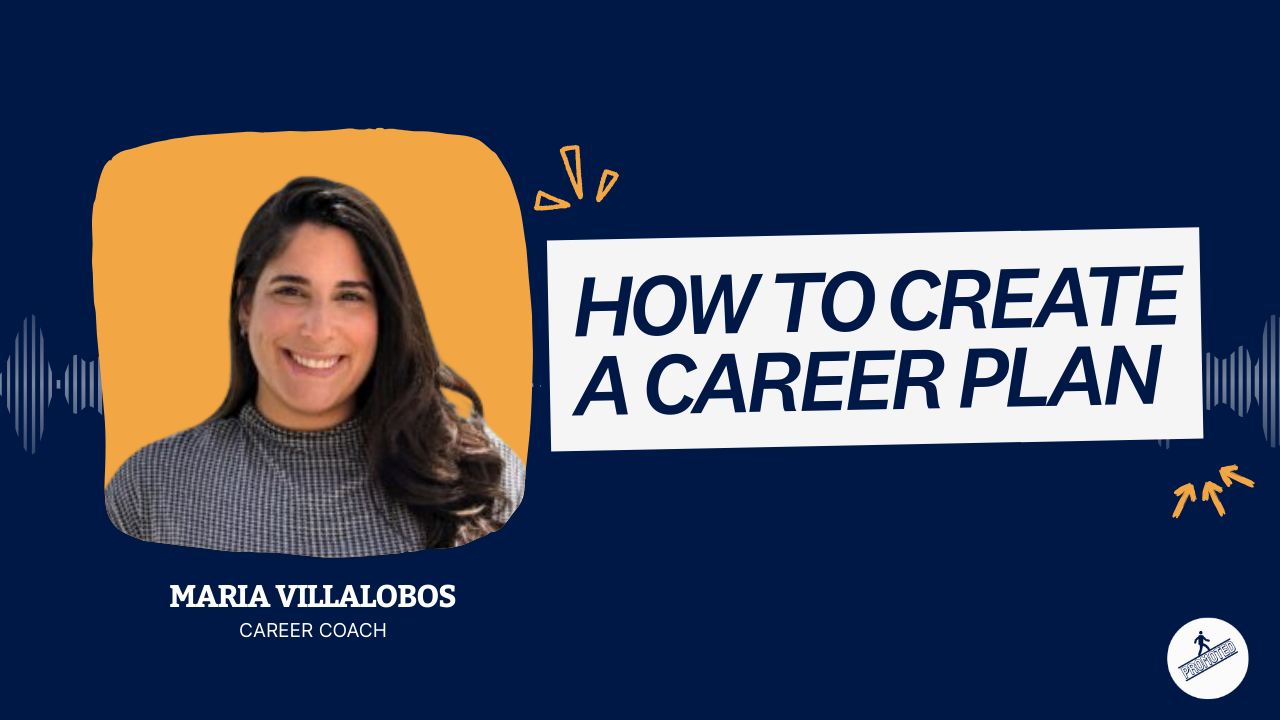
In this episode of Promoted, Merit America Career Coach Maria Villalobos breaks down why having a clear career plan matters more than ever—and how to build one that actually works for your life.
In a fast-changing job market, it’s easy to feel stuck, overwhelmed, or unsure of your next move. Maria explains how a career plan acts as your personal roadmap, helping you move beyond “just getting a job” toward building a career that offers stability, growth, and purpose.
Key Takeaways
A career plan isn’t about locking yourself into one path—it’s about creating clarity.
In this episode, Maria shares:
- Why career planning is essential in today’s job market
- How a career plan acts like a personal GPS for your future
- How to define what success looks like for you (not for everyone else)
- Why researching roles, skills, and salaries builds confidence
- How to stay patient and flexible when your journey isn’t linear
As Maria reminds listeners: Career journeys are not linear—and that’s okay.
Tune in to learn:
- What a career plan actually is (and what it isn’t)
- How to align short-term job moves with long-term goals
- Why understanding salary ranges helps you plan with intention
- How to map out skills, training, and next steps
- How career coaching provides guidance, structure, and accountability
Listen to full episode!
Join Maria Villalobos for a practical, reassuring conversation on how to create a career plan that helps you gain traction, stay focused, and move toward the future you want.
Podcast Transcript:
Maria:
Hi, I’m Maria, a career coach at Merit America—a national nonprofit organization providing pathways for workers out of low-wage jobs and into well-paying careers with upward mobility.
In today’s mini-episode of Promoted, we’re talking about something that’s more important than ever: creating a career plan—your personalized roadmap to a better job, higher pay, and a future you can feel good about.
Today’s job market is changing fast. According to LinkedIn, 58% of people worldwide are planning to look for a new job, even though many report the process has become more difficult. And according to Gallup, financial stability and career purpose are the top reasons people are making career moves.
Career planning helps you align your next step with your long-term goals—not just finding a job, but building a career.
Without a plan, you risk hopping from job to job without gaining traction. With a plan, every step you take brings you closer to your version of success.
So what is a career plan?
Think of it as your personal GPS. A career plan helps you map out where you want to go—whether that’s becoming a UX designer, IT support specialist, or data analyst. It helps define what success looks like for you. That might mean earning at least $60,000 a year, achieving better work-life balance, or working in a role that aligns with your values.
A career plan also helps you understand how you’ll get there—what skills you need, what support will help you, and what steps move you closer to your goal.
For example, a career goal might be: “I want to become a data analytics specialist in the healthcare industry.” Clear, specific goals help guide your plan.
Why is a career plan important?
A plan helps you stay focused and understand how to reach your goals more effectively. It can also help you understand potential salaries and prepare for salary negotiations—which can feel intimidating without clarity.
A solid career plan supports your financial goals and helps you build the life you deserve. It also highlights where you need to develop skills, gain experience, or pursue training.
Instead of saying, “I just want a new job,” you can say:
“I want to work in this industry, doing this type of work, earning this amount—and here’s how I’m going to get there.”
So how do you start creating a career plan?
First, get clear on what you want. Think about the industry or role you’re interested in. Next, define what success means to you—whether that’s financial stability, flexibility, or purpose.
Then, do your research. Look into roles, salaries, and skill paths. Research grounds your plan in reality and helps you set achievable goals.
After that, map out your steps. This might include training, certifications, skill development, networking, or mock interviews. Each step brings you closer.
Maria shares the story of a learner who came into the program knowing she wanted better work-life balance and a role that allowed her to support her family and give back to her community. Because she was clear on her goals, it was easier to identify roles that fit her life—not just her resume.
A few things to keep in mind:
- Career journeys are rarely linear—be open to detours
- Don’t get discouraged by road bumps
- Some jobs are bridges to where you want to go next
- Patience is key—success takes time
Maria compares career progress to taking a bus: it might not drop you off exactly where you want, but it gets you closer.
To recap:
A career plan helps you move intentionally toward your goals—especially in today’s job market. Define what success looks like, research your path, map your steps, and stay flexible along the way.
At Merit America, we understand how important career planning is. That’s why our programs include personalized coaching. Career coaches provide guidance, confidence, goal-setting, and accountability to help you stay on track.
Thank you for tuning in. If you’re interested in learning how Merit America can support your career planning, visit www.meritamerica.org.